Blog ·
Understanding Ceramic Coating: The Science of Paint Protection
The Intelligent Approach to Lasting Paint Defense
Ceramic coating represents a fundamental shift in how your vehicle's paint is protected. Unlike traditional wax or sealants that sit on top of your paint's surface, ceramic coating bonds at the molecular level to create a protective layer that becomes part of your clear coat.
The science begins with nanotechnology. Ceramic coatings are composed of silicon dioxide particles suspended in a liquid carrier. When applied to your paint, these particles cross-link and harden, forming a glass-like surface that's measured in microns—incredibly thin yet remarkably durable. This nanoscale structure fills microscopic imperfections in your paint, creating an ultra-smooth finish that enhances depth and reflectivity.
Protection Against Real-World Threats
Your vehicle faces constant environmental assault. Ultraviolet rays degrade paint color and clarity. Acid rain chemically etches clear coat. Brake dust, tree sap, and bird droppings bond to unprotected surfaces. Ceramic coating stands between your paint and these contaminants.
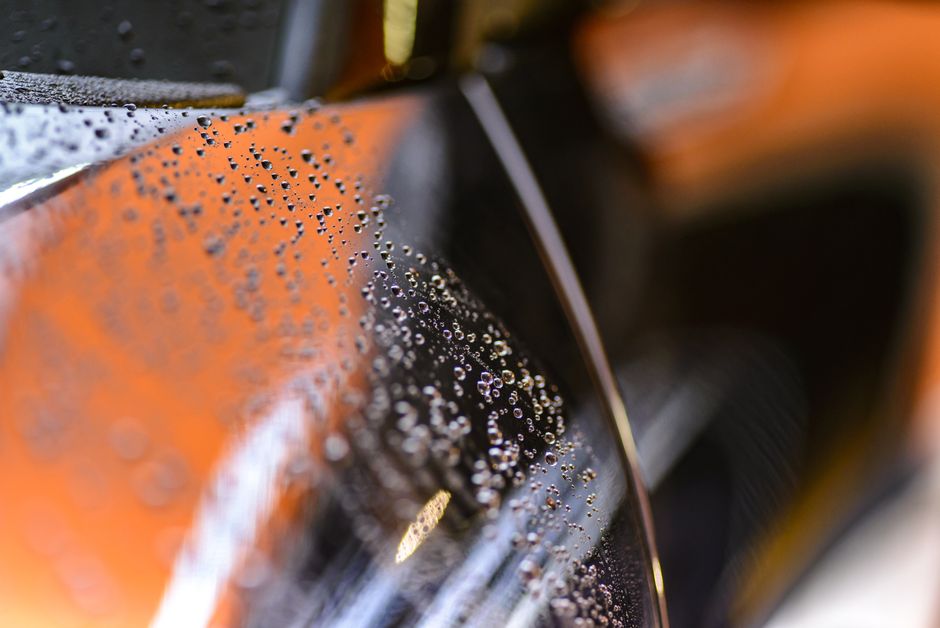
The hydrophobic properties of ceramic coatings are particularly valuable. Water beads and rolls off the surface rather than pooling, reducing the chance of mineral deposits, water spots, and oxidation. This hydrophobic effect also reduces the surface tension that allows contaminants to bond, making washing easier and safer.
UV Resistance and Long-Term Preservation
Quality ceramic coatings contain additives that reflect and absorb harmful UV radiation. This protection preserves your paint's original color depth and prevents the faded, chalky appearance that uncoated paint develops over time. By blocking UV damage, ceramic coating maintains your vehicle's aesthetic appeal while protecting your investment.
The Hardness Advantage
Ceramic coatings achieve hardness ratings between 8 and 10 on the Mohs hardness scale—approaching the hardness of sapphire. This hardness resists swirl marks, light scratches, and minor abrasions that penetrate unprotected clear coat. While no coating is completely scratch-proof, ceramic coatings significantly reduce how easily your paint shows damage from washing and environmental contact.
Why Application Matters
Understanding ceramic coating's science explains why professional application is essential. The paint surface must be properly prepared—free of contaminants, scratches, and imperfections that become permanently locked beneath the coating. The application process requires precise techniques, proper environmental conditions, and quality products. Professional detailers possess the expertise to ensure the coating bonds correctly and cures completely.
Ceramic coating isn't simply a product applied to your paint—it's a precision process that leverages scientific principles to create lasting protection. Choosing professional ceramic coating means choosing a smarter approach to preserving your vehicle's appearance and protecting your investment for years to come.